Buying a property seems to be a superior investment option, as it has been tested for centuries. This is true. Still, many nuances are not on the surface, such as taxation.
Dubai is renowned as a global destination for real estate investors. This jurisdiction offers higher yields than other jurisdictions, among other reasons, including the superior quality of real estate and increased popularity. In this article, we will review all foreign investor taxes and fees due in Dubai.
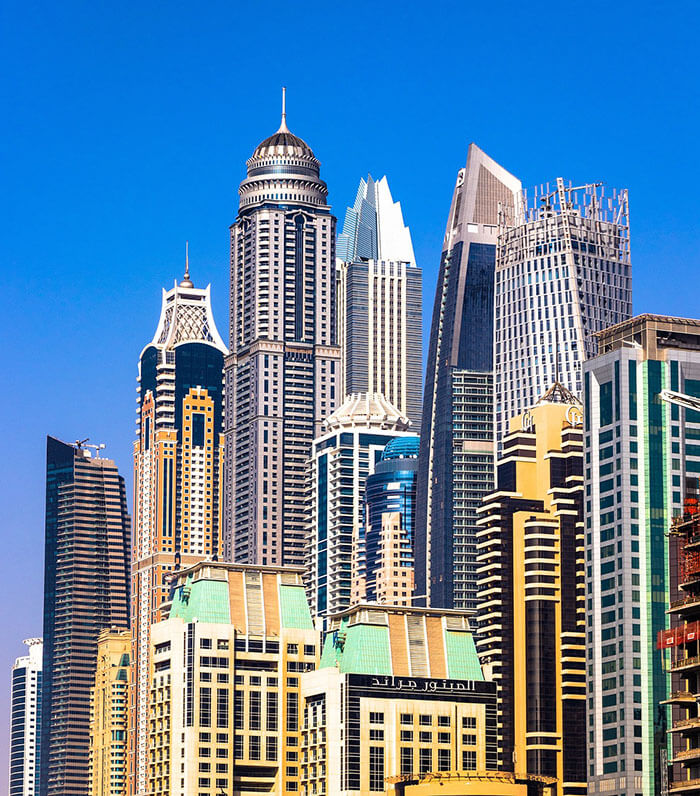
Why Invest in Dubai Real Estate: Financial and Tax Standpoints
Flexible Emirates laws have made the jurisdiction a tax haven for many international investors, including those who wish to own and/or lease their real estate properties:
- There are no annual property investment taxes in Dubai. This is a primary, yet not the last, reason why international investors seek opportunities to buy a property in Dubai. Apart from these features, there are many other tax exemptions. We will cover them later.
- Zero income tax in the UAE! You will not need to pay personal income tax on your real estate.
- Capital gains are not taxed as well. This means you will enjoy a high return on investment when reselling the property in the future.
- If you decide on your real estate, you will not need to pay anything. Yes, Dubai Rental income tax is absent, including expats.
- Dubai offers a wide range of different real estate properties, including commercial properties. Its development sector has steadily shown growth over the last few years. This tendency will likely remain in the long run, taking into account the policy of the local government aimed at increasing the capital flow in the country.
- A variety of double taxation treaties contribute to effective tax planning. This means you don’t pay similar taxes elsewhere once you pay applicable taxes in Dubai. This approach is another sign of Dubai’s policy of attracting investors and avoiding confusion about paying taxes overseas.
- Another great benefit of investing in Dubai is obtaining a visa. The visa is renewable for two and ten years and is valid for a specific value of real estate—around $200K and $545K, respectively. Thus, once you buy property in Dubai, you can legally gain 100% local tax residency.
- Strategic location. Dubai is a global business hub and a bustling city. It is sometimes referred to as the gateway between the East and West. The local infrastructure is excellent. It guarantees high living standards and connectivity with other destinations across the globe. Only the Dubai Airport ensures the coverage of over 200 cities worldwide.
Despite this destination’s incredible popularity, it is still possible to find high-quality offers at reasonable rates. For instance, buying apartments in growing districts like Jumeirah Garden City and Jumeirah Village Triangle is never limited to tax-free investments. Each purchase also features innovative technologies, comfort, and a top-notch lifestyle.
Is There Any VAT?
Another advantage of buying real estate in Dubai, especially an apartment, is that there is no VAT on property other than commercial.
There are only several cases where VAT is applicable. If you plan to do business related to real estate brokerage or management, the 5% VAT rate will apply to these transactions.
Is There Anything Else Owners Should Pay for Their Real Estate?
Apart from considering income tax policies, it is also good to note minor property fees. They are the must-haves for any real estate purchase and have to be taken into account during financial planning:
- The transfer fee is estimated at a 4%-rate of the property value.
- Registration fees vary depending on the property value. For real estate properties valued at less than AED 500,000, the registration fee is estimated at AED 2,000. For those real estate properties that cost more than AED 500,000, the registration fee will be AED 4,000.
- Agent fees, if any, are payable as a 2%-commission of the transaction price.
There is no need to compare stamp duty since such payment is absent in freehold zones. However, an owner will also have to pay maintenance fees later. The latter are calculated based on the property type. Taking into account some municipal fees and annual charges is also sometimes necessary. The latter depends on the type and location of the real estate property. These points are always better to clarify in advance with your developer or agent during property considerations.
Types of Property Ownership
If you want to own real estate in Dubai, there are several options in place:
- Freehold property envisages the full owner’s rights regarding the real estate property and the land it is built on. This type of ownership remains a cornerstone of the Dubai real estate laws, particularly in designated zones. Freehold zones in Dubai allow 100% ownership for non-resident investors.
- Leasehold properties are available for a period of up to 99 years. They most often cover residential and commercial units. Such options are governed by detailed agreements protecting both landlords and lessees.
- Shared property. This is a comparatively new development of Dubai real estate laws. It provides excellent flexibility for families and business partners willing to invest jointly in local real estate and split the associated expenses. This ownership type is perfect for offshore structures.
Legal Process of Buying Property in Dubai
Aside from the tax implications, it is also impossible to omit some basic legal compliance standards that have to be adhered to:
- Identify a property in established or growing areas, emphasizing freehold zones. You can do it alone since the local market is transparent and open to foreign investors. Another good alternative is hiring a local agent who will do all the work instead of you for a moderate service charge. In any case, there are two points to keep in mind – your budget and investment goals.
- Verify preselected real estate properties. You can do this independently or through your agent using the Dubai Land Department (DLD) portals. It is essential to check the property title and/or the developer’s credentials.
- Collect must-have documents:
- Passport
- Bank statements confirming the amount and origin of funds due to payment for the chosen property
- Developer’s no-objection certificate
- Purchase agreement
- Proof of payment of the entire amount or a down payment at a minimum
At this stage, it is essential to follow specific documentation requirements, including verifying them by a notary.
- Sign the Memorandum of Understanding (MOU). This document is an essential precondition for the expected sales and purchase transaction. It outlines the terms and conditions and typically requires a 10% deposit to secure the deal.
- The property transfer should be registered with the DLD. Once this is done, the property title is deemed to be transferred.
High Returns on Investment
The Dubai real estate market offers one of the highest returns in the world, ranging from 5% to 10%. Innovative and growing areas, such as Jumeirah Garden City and Jumeirah Village Triangle, steadily attract numerous investors. Buying a property in such districts is an excellent choice for living or enjoying high returns in the short term.

Innovations and Property Protection in Dubai
The local laws and regulations emphasize innovations and advanced technologies. Both serve the purposes of the Dubai 2040 Master Plan, which aims to create a sustainable and thriving urban life. Thus, buying a property now—especially an apartment, given the steadily increasing number of residents—is the best long-term investment.
Various investment incentives, low tax obligations, innovative infrastructure, and an immaculate lifestyle are powerful advantages that attract many non-resident investors. The high level of property protection is also essential. The local government applies various security measures. Most recently, it has decided to implement Blockchain technologies to further bolster property protection in Dubai.
Buy Real Estate in Dubai: Make a Smart Investment in a Smart City!
Dubai is an innovative, fast-growing, and tech-driven city in the UAE. Aside from the purchase value, the payments due are limited to property transfer fees and the costs to agents if the latter are involved in the process.
Dubai tax regulations don’t envisage quite relaxed requirements compared to many other jurisdictions. The Dubai real estate tax is absent, and no taxes are applied to investors’ income and capital gains. The same is relevant to VAT, which is also absent.
Dubai offers a great combination of advantages and investment opportunities. Opt for an immaculate apartment in one of the growing districts, such as Jumeirah Garden City or Jumeirah Village Triangle, and you won’t miss a thing!