Timing matters in international property markets, and the right location can define your returns. If you’re deciding between Istanbul and Dubai for your next move, this comparison breaks down the essentials for smart investment decision-making. Here’s a clear-cut comparative market analysis of two major players — one connecting Europe and Asia, the other rising confidently from the Gulf’s golden sands.
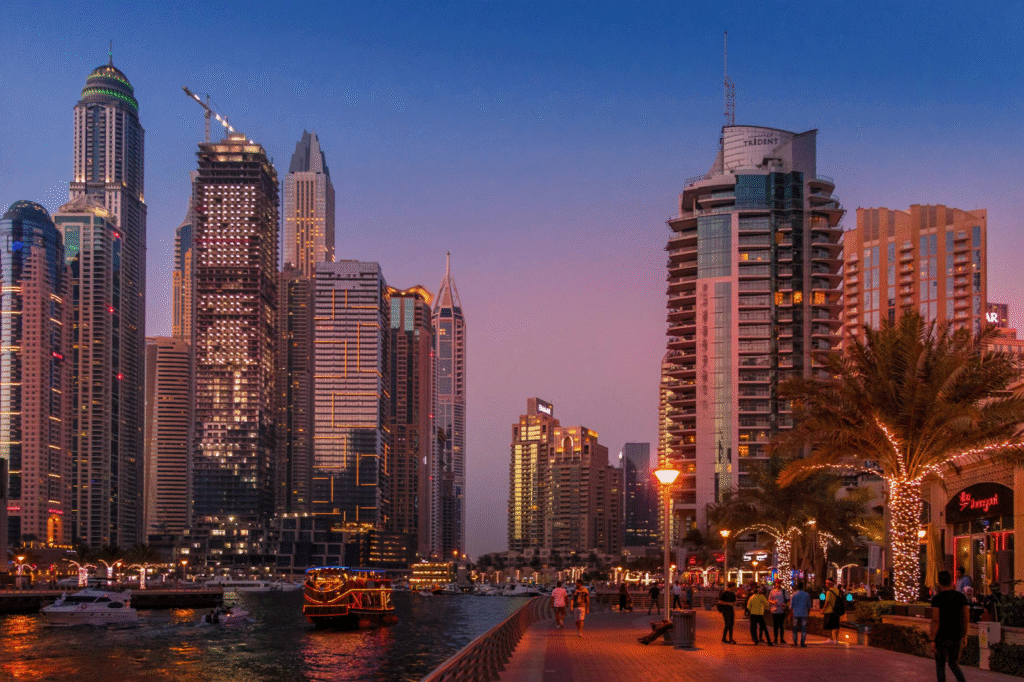
Market Dynamics: Dubai vs Istanbul
Dubai’s Real Estate Market
Dubai’s real estate market has grown into a symbol of urban ambition. The emirate saw 166,400 real estate sales in 2023, worth AED 634 billion (about $172.6 billion), according to official figures from the Dubai Land Department. This surge underscores the city’s rising profile in global real estate investment circles. Urban growth indicators remain strong, supported by low taxes, long-term visas, and 100% foreign ownership in designated zones.
Dubai’s residential real estate sector continued its upward trajectory in Q3 2024, recording sales worth AED 120 billion (approximately $32.7 billion), according to CBRE. Meanwhile, Knight Frank’s Destination Dubai 2024 report forecast that ultra-high-net-worth individuals, those with personal fortunes exceeding $20 million, would pour $4.4 billion into the city’s luxury property market by year’s end, marking a striking 76% year-on-year increase.
Istanbul’s Real Estate Market
Istanbul’s real estate market, while historically stable, is navigating choppy waters. Inflation in Turkey reached 67% year-on-year in early 2024, squeezing household budgets and impacting property market performance. While apartment prices in Istanbul remain lower, averaging $1,300 per square meter compared to Dubai’s $3,800, market volatility presents a sharper investment risk analysis.
That said, property in Turkey remains attractive for those seeking long-term appreciation and affordable entry points, particularly in up-and-coming areas like Beylikdüzü and Başakşehir.
Investment Opportunities: Dubai Holds the Edge
Capital Growth Prospects
Dubai remains a magnet for investment opportunities due to its economic diversity, strong governance, and smart positioning. A comparative investment analysis shows Dubai’s capital growth prospects outpacing Istanbul’s. High-end projects in Dubai Marina or Business Bay show double-digit annual returns for early investors.
Meanwhile, Istanbul presents a different story. While property prices are climbing, much of the increase is tied to currency devaluation rather than true market growth. The lira’s volatility adds an extra layer to investor risk assessment, impacting long-term planning.
Rental Market and Yields
Dubai’s rental market remains a lucrative option for international landlords. Expats make up nearly 90% of the population, ensuring a constant demand for quality housing. In Istanbul, rent control policies and inflation-linked contracts can cap landlord profits, complicating investment strategy for foreign buyers.
Legal and Cultural Considerations
Buying Property in Dubai
Buying a property in Dubai is a transparent, polished process. Foreigners can buy real estate in freehold areas without requiring a local partner. The Dubai Land Department ensures all transactions are recorded and regulated. Plus, property investment of over AED 2 million (~$545,000) can qualify buyers for the 10-year Golden Visa — a magnet for global real estate investors.
Buying Property in Istanbul
In contrast, purchasing real estate in Istanbul comes with red tape. Foreign investors must navigate military clearance in some zones, deal with complex title deeds, and handle fluctuating exchange rates. Yet, investing in Istanbul real estate over $400,000 may make one eligible for Turkish citizenship, which still appeals to investors from non-EU countries.
Culturally, both cities are cosmopolitan. However, life in Dubai offers greater safety, modern infrastructure, and high-end amenities that appeal to global investors. Istanbul, with its historical charm, still leans more traditional in its suburban areas, which may influence real estate residence decisions.

Economic Global Market Indicators and Signals
Dubai
- GDP growth: 4.0% (Dubai Statistics Center)
- Inflation rate: 2.1% annually
- Tourism recovery: 5.31M visitors in Q1 2025
- Foreign direct investment (FDI): targeting $65.35B by 2031
These global market dynamics indicators suggest a city that’s attracting talent, capital, and innovation. A resilient economic backdrop makes Dubai a compelling choice for long-term investors.
Istanbul
- GDP growth (Turkey): 2.7%
- Inflation rate: 67%
- Tourism: as of early 2025, 1.25 million foreign visitors
- Currency depreciation: Turkish lira fell 36%
While Istanbul offers a sizeable domestic market and rich cultural appeal, high inflation, political fluctuations, and currency depreciation pose challenges in investment decision-making.
Real Estate Comparison: Dubai or Istanbul?
| Factor | Dubai | Istanbul |
| Average property price (USD) | $3,800/m² | $1,300/m² |
| Rental yield | 6–8% | 3–5% |
| Capital growth trend | Strong, stable | Mixed, inflation-driven |
| Legal clarity | High | Moderate |
| Foreign ownership rights | Full in freehold zones | Restricted in some zones |
| Citizenship via investment | Yes (10-year visa) | Yes (via $400,000 property) |
| Market volatility | Low | High |
| Urban development | Strong | Slower, uneven |
Final Thoughts: Deciding Where to Invest Wisely
Choosing between Istanbul and Dubai hinges on comparative investment analysis. Investors prioritizing capital growth prospects, market stability, and a predictable legal framework will find Dubai’s real estate market a more strategic pick. Its solid investment environment, ambitious infrastructure projects, and global investor appeal make it an unmatched destination for real estate.
On the other hand, Istanbul real estate may still appeal to value-driven investors looking for entry-level options or those interested in obtaining Turkish citizenship. However, one must approach with caution and a well-honed investment risk analysis. On the grand chessboard of international property trends, Dubai is already making its next move, and developers like Object 1 are setting the pace. So if you’re looking to buy real estate not just to own, but to grow, thrive, and secure your future, Dubai is synonymous with smart investing.