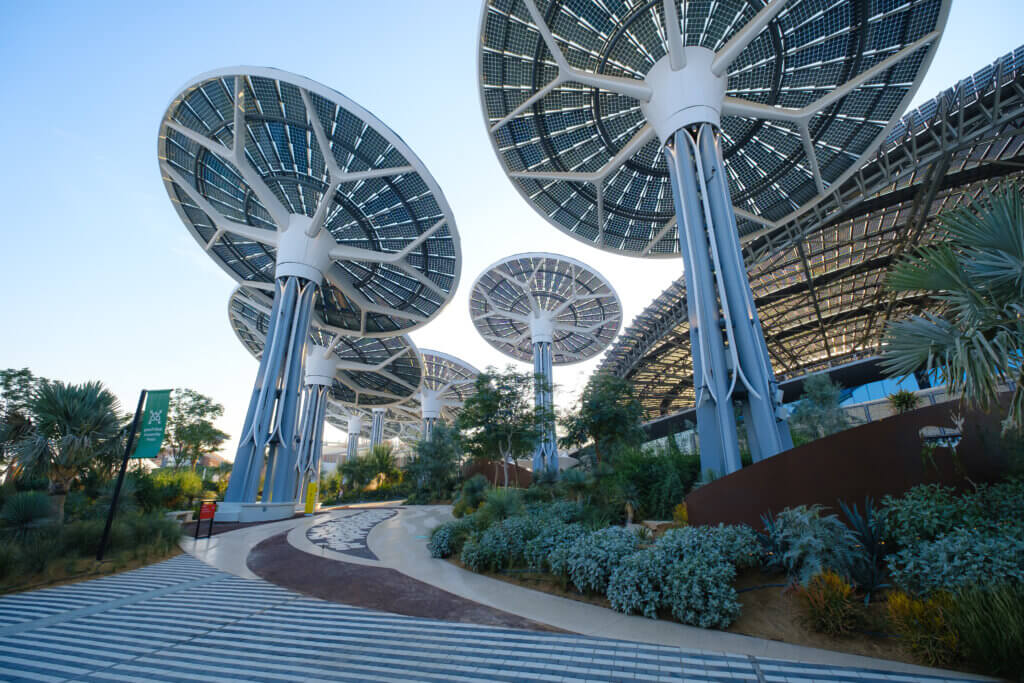
Dubai is looking forward to becoming one of the world’s most sustainable cities.
Finally, the importance of protecting the earth is realized and sustainability is a highly developing trend right now. The current state of the global climate and the continuing depletion of natural resources is scary enough to put environmental care at the top of our thinking list.
Needless to say, sustainability should be the core of any property, both new and existing. This issue can improve life quality for residents and increase the appeal of real estate to investors.
Sustainable Investment in Real Estate
In a rapidly urbanizing world, the real estate industry lies at the center of an unprecedented level of growth and activity.
Sustainable investment is about the responsibility and potential the real estate industry holds to reach climate and environmental sustainability targets. Investors, residents, cities, as well as governments, can and have to play a key role to achieve a reduction of greenhouse gases in the context of the construction and operation of real estate.
For example, it is estimated that the construction sector accounts for approximately 17% of GHG emissions in the Gulf Cooperation Council (GCC) countries.
It is quite obvious that the real estate sector will remain a prime target for sustainable and comprehensive long-term policy action now and in the future.
Sustainable Investment: Pros
1. Sustainable property is mainstream now
Sustainable property investments have developed from a specific niche to mainstream for new real estate developments and investments over the past decade. Green buildings represent a significant share of global development projects, which is expected to further grow.
2. Sustainability rating is a must
When investors invest in new development projects, those shall have or qualify for a sustainability rating.
3. Many properties are not “future-proof”
Experts are convinced, that many existing properties will be rated as not “future-proof” and will successively fall behind when competing for customers, occupancy rates, and investors in the mid to longer-term future.
As a result, those properties will have a significant discount for a lack of sustainability (“grey discount”) in the future. Mindful investors anticipate and tend to reduce exposure to such long-term risks.
Sustainable Investment: Cons
1. Higher initial costs
Potentially higher initial costs for buildings are particularly obstructive when short amortization periods and high yield expectations are at the center of attention.
2. “Pay off” in the medium and long run
Investments into sustainability characteristics are expected to “pay off” in the medium and long run.
3. Sustainability costs are not symmetric
From the perspective of owners and investors, sustainability costs are not symmetric with resulting energy savings. In other words, energy-saving measures require significant one-off capital expenditures to be borne by owners and investors, but the resulting reduction of operating costs usually occurs over time and benefits mostly tenants.
Dubai: Home to Sustainable Real Estate
Dubai understands the importance of protecting the environment and ensuring that it can be enjoyed for generations to come.
That is why the city has these sustainable initiatives to offer:
1. Sustainability of real estate in Dubai
- Improves quality of life in the emirate
- Increases attractiveness of Dubai real estate for investors
- Reduces operating costs for developers
2. Green Building Code of Dubai Munipalicity
- Focuses on rational use of energy, water, and materials
- Promotes healthy indoor and outdoor environments
3. Construction
- Optimizing building orientation and insulation
- Maximizing the use of daily lighting
4. Materials supplies and operational perspective
- Using environment-friendly building materials
- Having energy-efficient lighting and air-conditioning systems
- Integrating solar panels and condensate recovery systems
5. Renewable energy targets: By 2030 – 15%
We don’t know if you support sustainability, but for Dubai it seems pretty clear that the future will be low-carbon, with green infrastructure and smart buildings being a major focus. Properties will embrace environmental-friendly architecture, such as energy-efficient air conditioning units, recycled construction materials, and renewable energy systems for heating and cooling, as well as automated thermostats.